
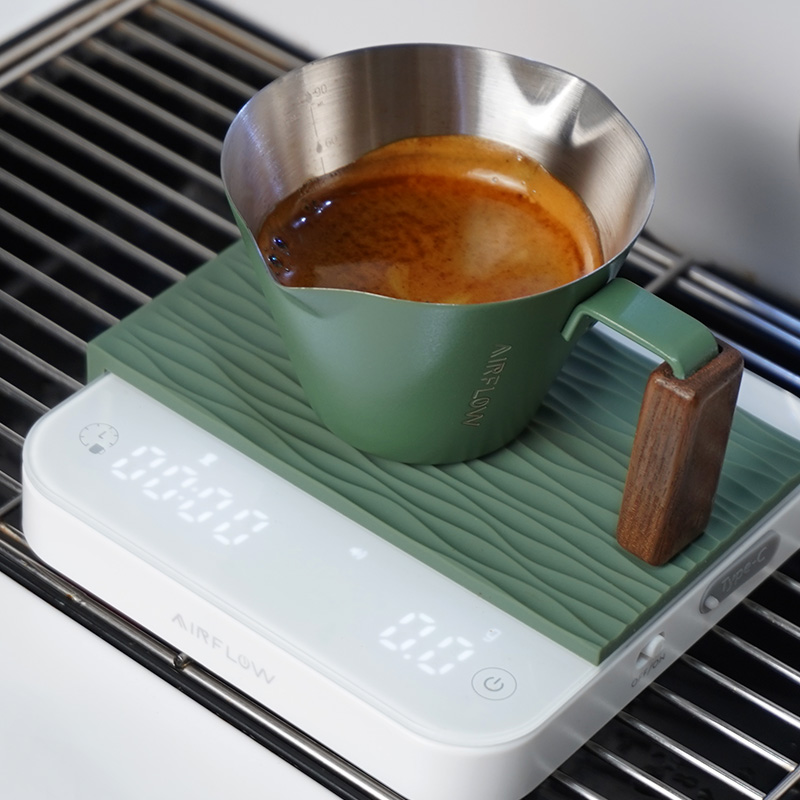
Most inconsistent espresso at home has nothing to do with the machine. It comes from what happens in the thirty seconds between the grinder and the group head — and specifically from the small clumps of coffee that land in the basket unevenly.
The Weiss Distribution Technique, almost always shortened to WDT, is the fix. It is simply stirring the dosed grounds with fine needles before tamping. It costs nothing to learn, takes seconds to perform, and it is the single change most home baristas notice immediately.
What is a WDT tool?
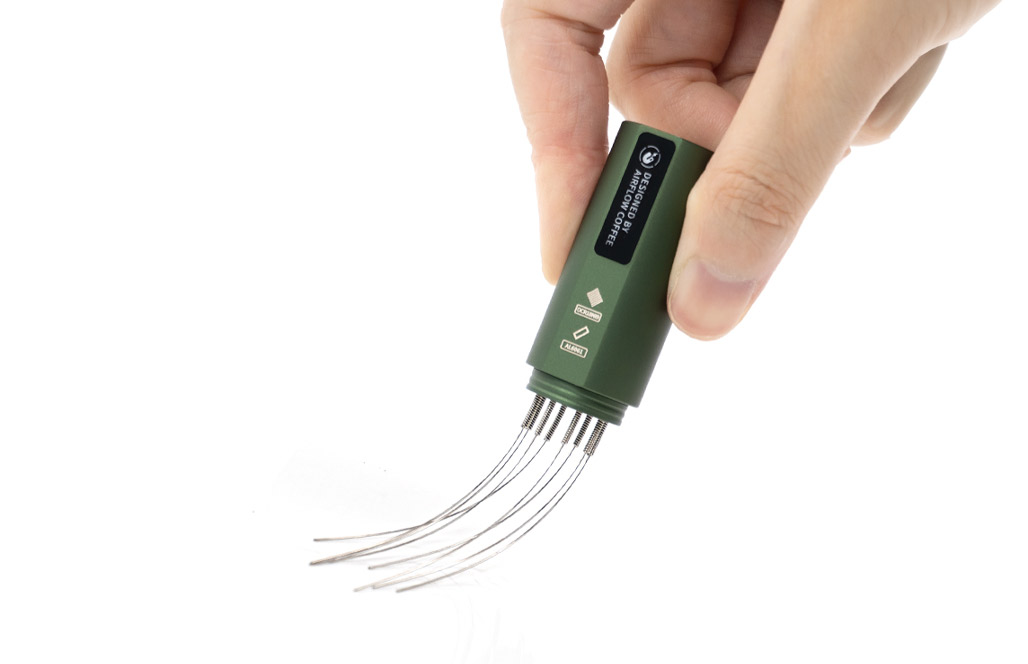
A WDT tool is a handle holding a cluster of very fine needles — typically between 0.3mm and 0.4mm thick. You lower it into the dosed portafilter basket and stir, breaking up clumps and redistributing coffee into the gaps around the edges of the basket.
The technique is named after John Weiss, who described it on coffee forums as a way to deal with clumping long before purpose-built tools existed. Baristas originally used straightened paper clips and acupuncture needles taped to corks. The principle has not changed; only the tools have.
Why clumps ruin espresso
Espresso extraction depends on water meeting equal resistance everywhere in the puck. When grinding, static electricity and the tight tolerances of conical and flat burrs cause grounds to leave the chute in clumps rather than as loose fines.
Those clumps create density variation. Tamping does not fix this — it presses down on the surface, but a dense pocket stays dense and a loose pocket stays loose. Under nine bars of pressure the water simply takes the easiest route.
What channelling looks like
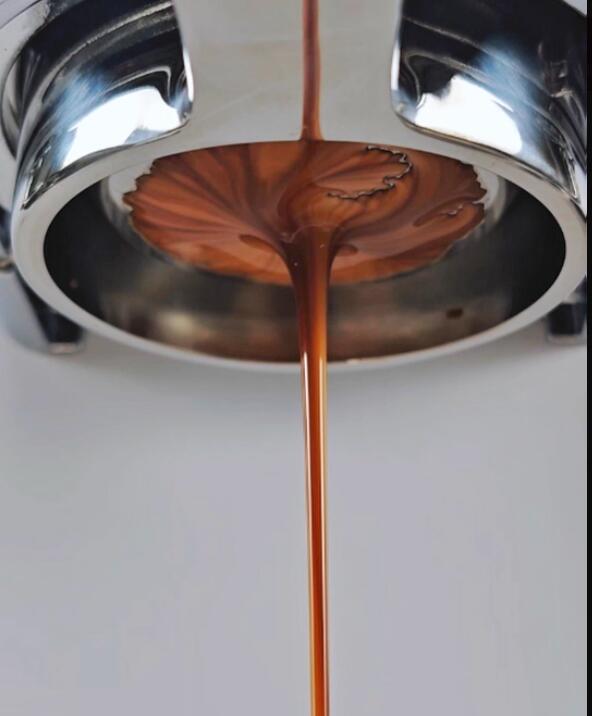
That easiest route is a channel. On a bottomless portafilter you will see it clearly: fast jets spraying sideways, blonde patches appearing early, or the stream splitting instead of drawing together. In the cup it shows as a shot that is simultaneously sour and bitter — some of the coffee is under-extracted while the coffee around the channel is over-extracted.
Channelling also explains why shot times refuse to settle. Two identical doses at an identical grind setting can run 22 seconds and 34 seconds, which makes dialling in genuinely impossible. You end up chasing the grinder when the problem was in the basket.
How to use a WDT tool
The technique is easy to learn and just as easy to overdo. A repeatable routine matters more than any particular stirring pattern.
1. Dose into the basket. Grind straight into the portafilter, ideally through a dosing ring or funnel so nothing spills over the rim while you stir.
2. Stir to the base. Lower the needles all the way to the bottom of the basket and move in small circles, working around the outer wall and then through the centre. This is where clumps hide.
3. Keep it to 10–20 seconds. Long enough to break everything up; short enough to avoid compacting the bed. Excessive stirring can choke the shot.
4. Level and tamp. Draw the needles across the surface to level it, tap the portafilter lightly on the bench, then tamp flat and firm. A level tamp on an evenly distributed bed is all you need.
5. Change one thing at a time. Once WDT is part of your routine, keep it in every shot. Consistency is the point — adding it occasionally just introduces another variable.
What to look for in a WDT tool
Needle gauge
Thinner needles pass through the coffee with less disturbance. Anything around 0.3mm to 0.4mm works well; thicker wires push grounds around rather than separating them, and they leave visible tracks in the bed.
Needle depth and spread
Needles need to reach the base of the basket — clumps at the bottom cause the worst channelling. A wide enough spread means fewer passes and a faster routine.
Handle weight and balance
A weighted handle lets the tool hang naturally in your fingers so you stir with the wrist instead of gripping. It also stops the tool rolling off the bench mid-workflow.
Where it lives between shots
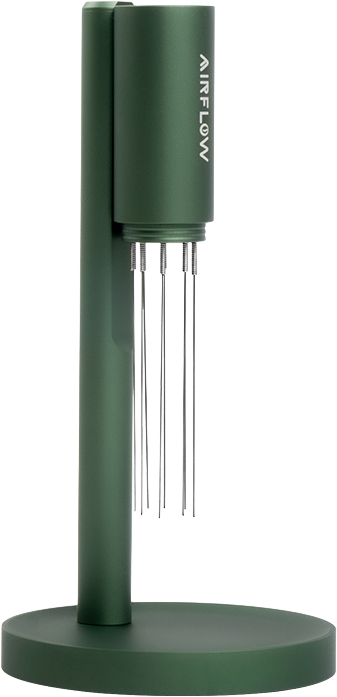
A WDT tool with wet grounds on the needles needs somewhere to sit. A magnetic stand keeps the needles clear of the bench and stops them bending — bent needles are the most common way these tools are ruined.
Does WDT replace a distributor?
No — they do different jobs. A WDT tool works vertically through the full depth of the bed, breaking up clumps and correcting density. A gravity distributor or leveller works on the surface, flattening the top of the dose before tamping.
If you only add one tool, add the WDT tool: density problems below the surface are the ones that cause channelling. A distributor afterwards makes the surface tidy and the tamp square, which is a genuine improvement, but it cannot undo a clump sitting at the base of the basket.
A twenty-second habit
WDT is not a trick that improves one shot. It removes an entire category of variability from your workflow, so when you do change the grind or the dose you can actually see what that change did.
For most home setups in Australia — a decent grinder, a single-boiler machine and a bag of local roast — it is the highest-return twenty seconds in the whole routine.
Stir first, tamp second, and let the extraction tell you the rest.